

Introduction
Yorkshire is a historic country in England, centered on the country town of York. The region was first occupied after the retreat of the ice age of the 8000 B.C. during the first millennium A.D, it was inhabited by Celtic Britons and occupied by romans, angles, and Vikings. The name comes from “eborakan” (c.150) an old Brythonic name which probably derives from “efor” or “the place of yew trees “. Many Yorkshire dialect words and aspects of pronunciation derives from Old Norse due to the Viking influence in this region. The name Yorkshire first appeared in writing in the Anglo-Saxon chronicle in 1065. It was originally composed of three sections called thrydings, subsequently referred to as ridings.
During the industrial revolution the west ridings became the second most important manufacturing area in the United Kingdom, while the predominant industries of the east and the north ridings which remained fishing and agriculture. In modern times the Yorkshire economy suffered from a declining in manufacturing which affect cited its traditional coal, steel, wool, and shipping industries.
Geography
Rumelian Castle
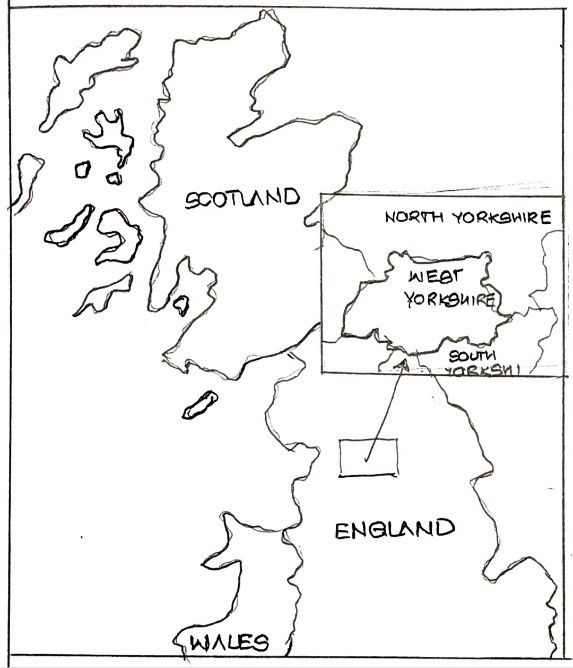
Yorkshire was not a homogenous natural or topographical area and the contrasting conditions and natural resources lead to differences in the way that the different areas of the country developed overtime. These differences manifested themselves in contrasting economic development as well as the styles of the vernacular architecture of the various areas of west. The north York moors area is even now very different from the south Yorkshire cornfield area of west riding And this differs greatly from Holderness in Yorkshire there is a very close relationship between the major topographical areas and the underlying geology. The pen nine chain of hills in the west of carboniferous origin. The central vale is perm -Triassic. The north York moors in the northeast of the country are Jurassic in age while Yorkshire holds to the southeast are cretaceous chalk uplands.
Roman influence
Yorkshire was effectively part of the Roman Empire from 71 ad to about 410 ad. Initially, roman advances in Britain stopped at the river don, the southern boundary of the brigantine territory. The temple borough area of Rotherham, just south of the don, takes its name from the remains of the roman fort found here. This was first built in wood c.55 ad and was later rebuilt in stone. Queen Cartimanoua, the last ruler of brigands depended on roman support to withstand the forces
Steel production in this time involved long working hours in unpleasant conditions that offer little to no safety conditions. Friedrich Engels in his” the condition of the working class in England in1844” described the conditions prevalent in Sheffield at that time. The city became one of the main centers for trade union organisations and agitation in the U.K. By the 1860’s the growing conflict between capital and labour provoked they so called “Sheffield outrages”, which culminated in a series of expansions and murders carried out by union militants of estranged husband, ventis. The territory remained independent unit 69 ad, when the ninth region under Quintus petillius cerialis moved in to quell civil war between cartimandlia and venutius, bringing to an end to bringing rule in England.

Modern
The 19th century was a time of rapid urbanization conditions that offered little or safety and industrialization in Yorkshire. Yorkshire was already a center of industry in textiles, concentrated in west riding. Steel continue to be concentrated around Sheffield, as was the production of coal. The worsted sector of the textile industry was the first to adapt the machinery developed by Lancashire cotton industry and had become completely factory based by the 1860’s including large horizontally integrated mills
Depiction of urbanization

Because of its long history, Yorkshire has a wealth of historic architecture, several parish churches, notably those at kirdaleand kirk hammerton near York, preserve pre-norman interiors. After the Norman Conquest Yorkshire gained impressive ecclesial architecture including the now ruined Bolton and rievaulx abbeys, ripon cathedral and the outstanding gothic York minister. The historic walled city of York also preserves several examples of medieval secular architecture including the merchant adventurer’s hall and the guildhall.
Yorkshire’s noteworthy castles including Bolton, Helmsley, Pickering and Scarborough. Notable among the great 18th century country houses of Yorkshire are went worth, woodhouse and castle Howard.
Ripon cathedral
